

Generative AI is already inside every company, whether IT approved it or not. Employees are pasting source code into chatbots, feeding financial models into copilots, and asking AI to draft the emails nobody should read. Most of it is well-intentioned. All of it is risk.
Palo Alto Networks’ Prisma AI Access Security gives organizations visibility and control over GenAI use, without slowing anyone down. The challenge wasn’t proving the product worked. It was making a technical access-security tool feel as human as the problem it solves.
When Palo Alto Networks came to Just Global, they needed a campaign that could say something true about how people actually use AI at work, the good, the reckless, and the six-months-from-now regret, and turn that truth into demand for AI Access Security.
Challenge
Security campaigns default to fear. Palo Alto Networks needed something sharper: a way to name the very real, very human behavior driving GenAI risk, without shaming the employees doing it, and without burying the product in jargon.
The category conversation is crowded with “AI governance” decks that all sound the same. We needed a platform flexible enough to speak to a dozen different buyers, the CISO, the CFO, the general counsel, the head of R&D, each worried about a different leak, in a different tool, for a different reason. And it had to work everywhere the buying committee actually looks: paid social, programmatic display, OOH, transit, and the product’s own web experience.
Strategy
We didn’t need to invent a threat. We needed to name the moment it was already happening, the prompt someone was about to hit send on.
Every persona in the enterprise has their own version of the same story: a real job to do, a GenAI tool that makes it faster, and a blind spot they don’t know they have. Rather than lecture people out of using AI, we built a platform that holds two truths at once, you can’t stop the behavior, and you don’t have to.

Solution
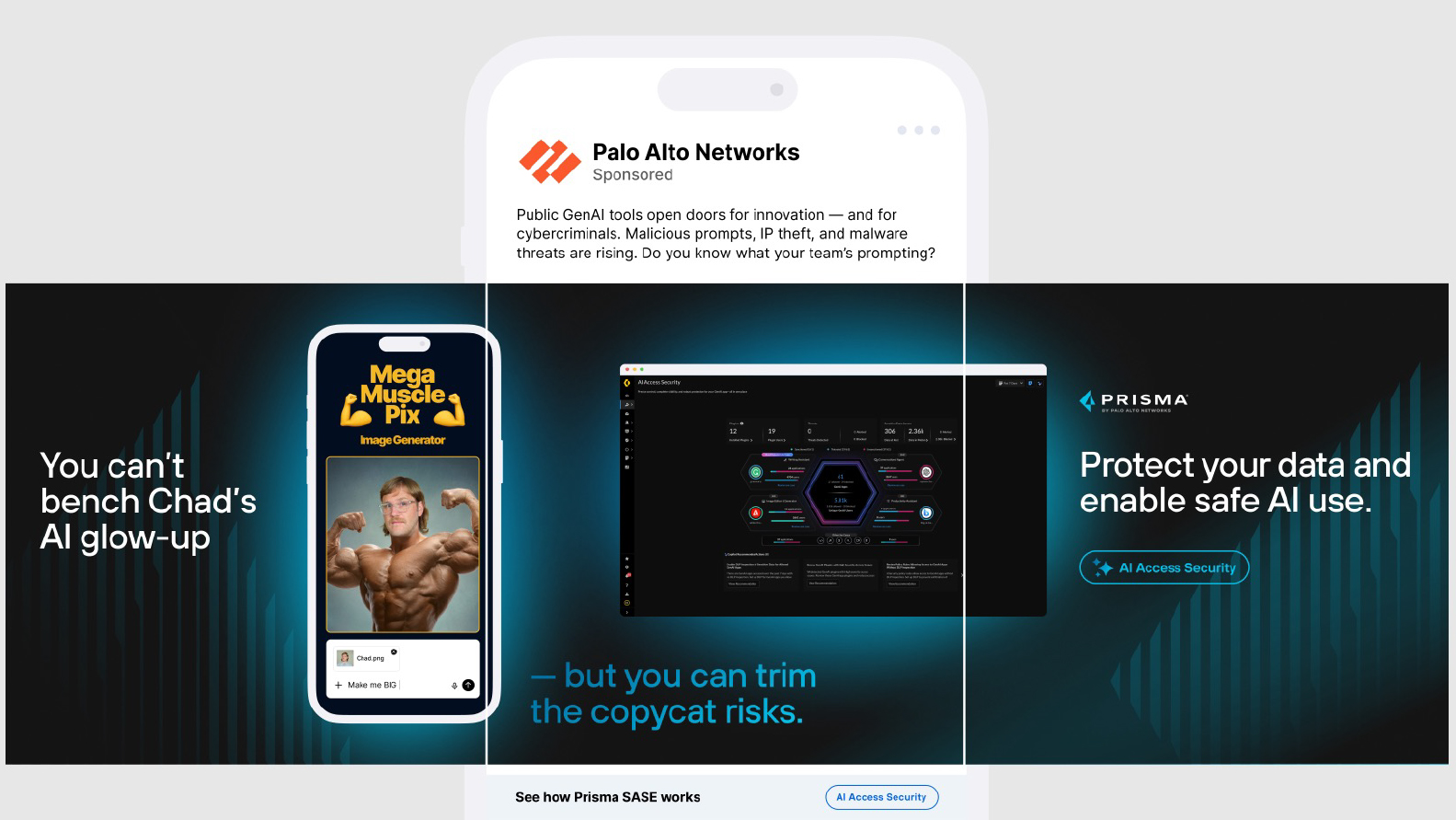
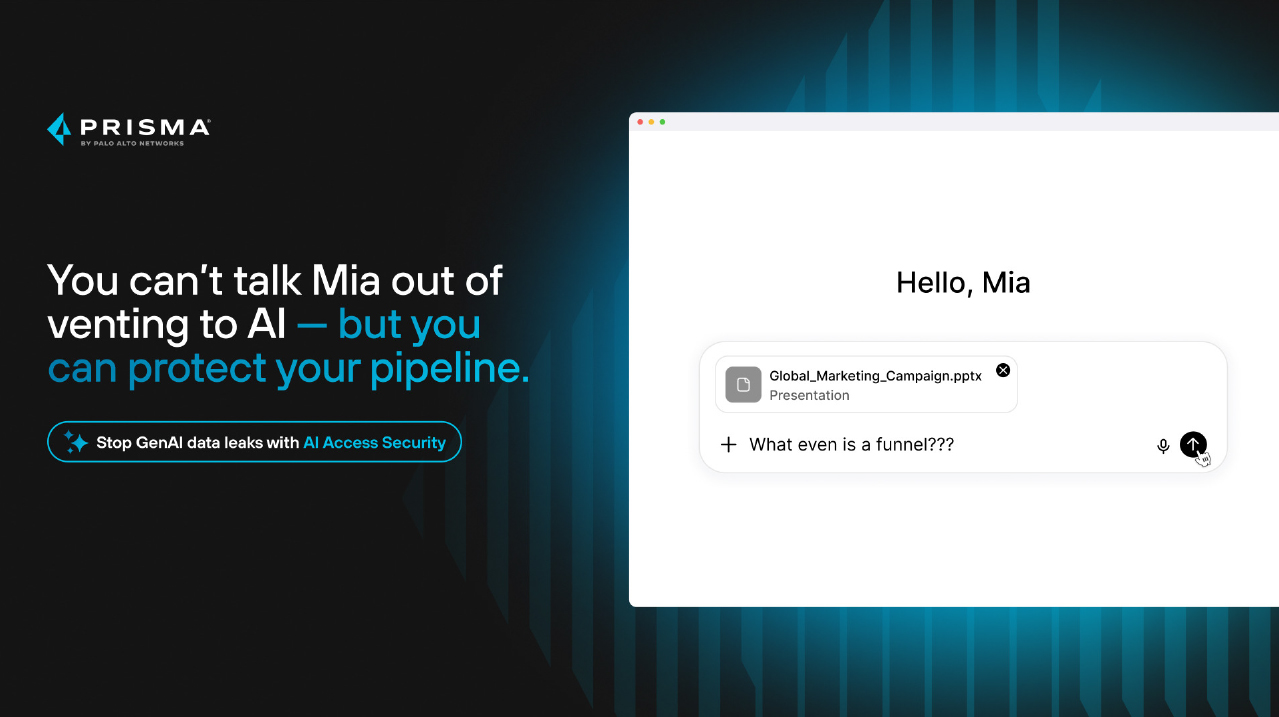
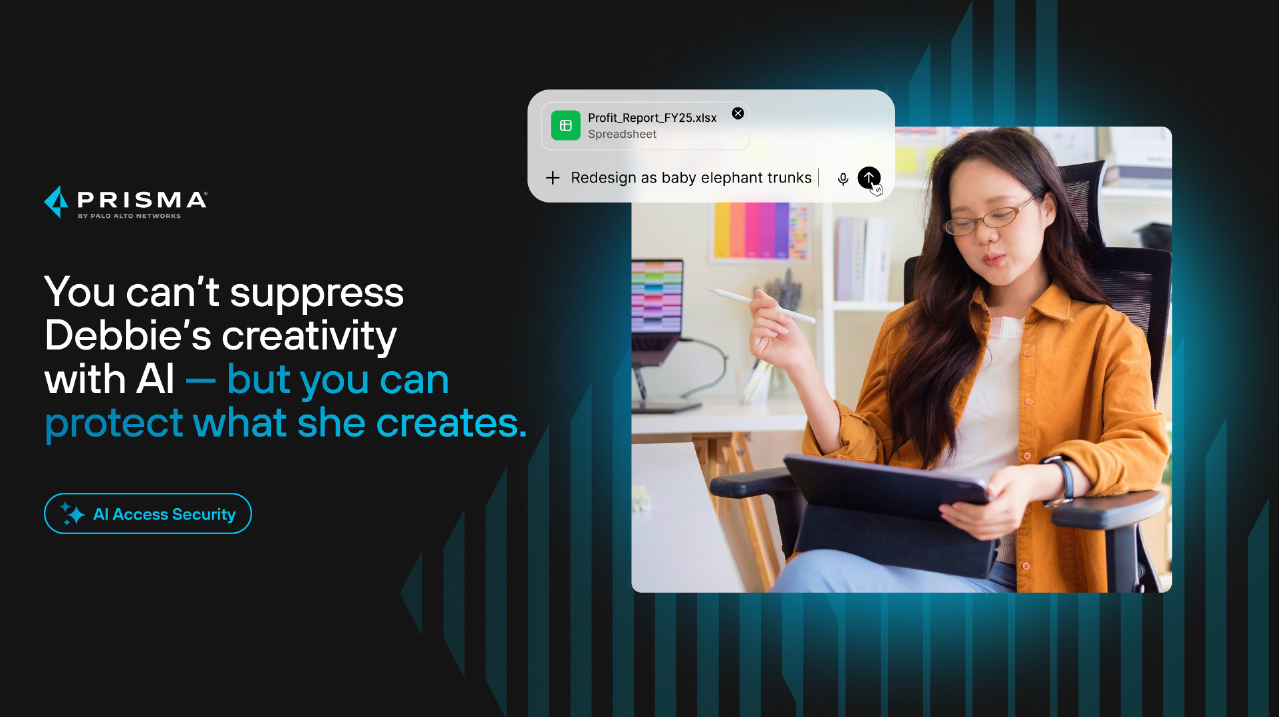
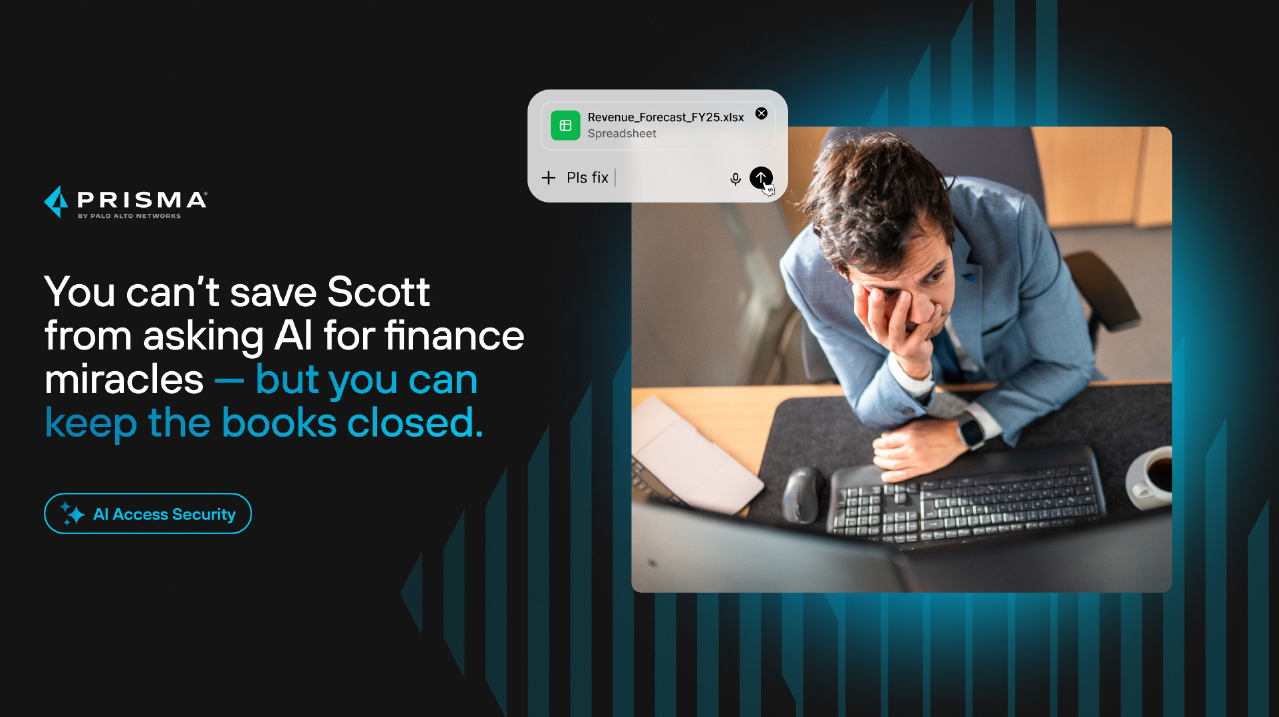
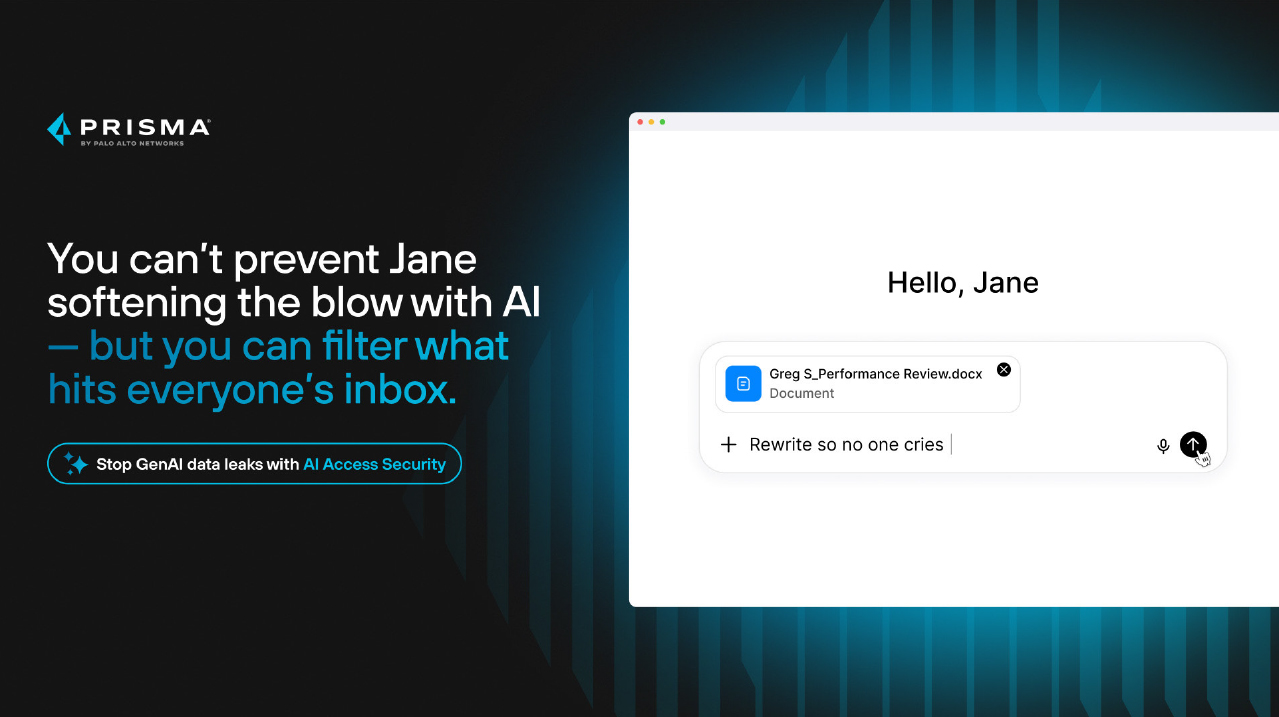
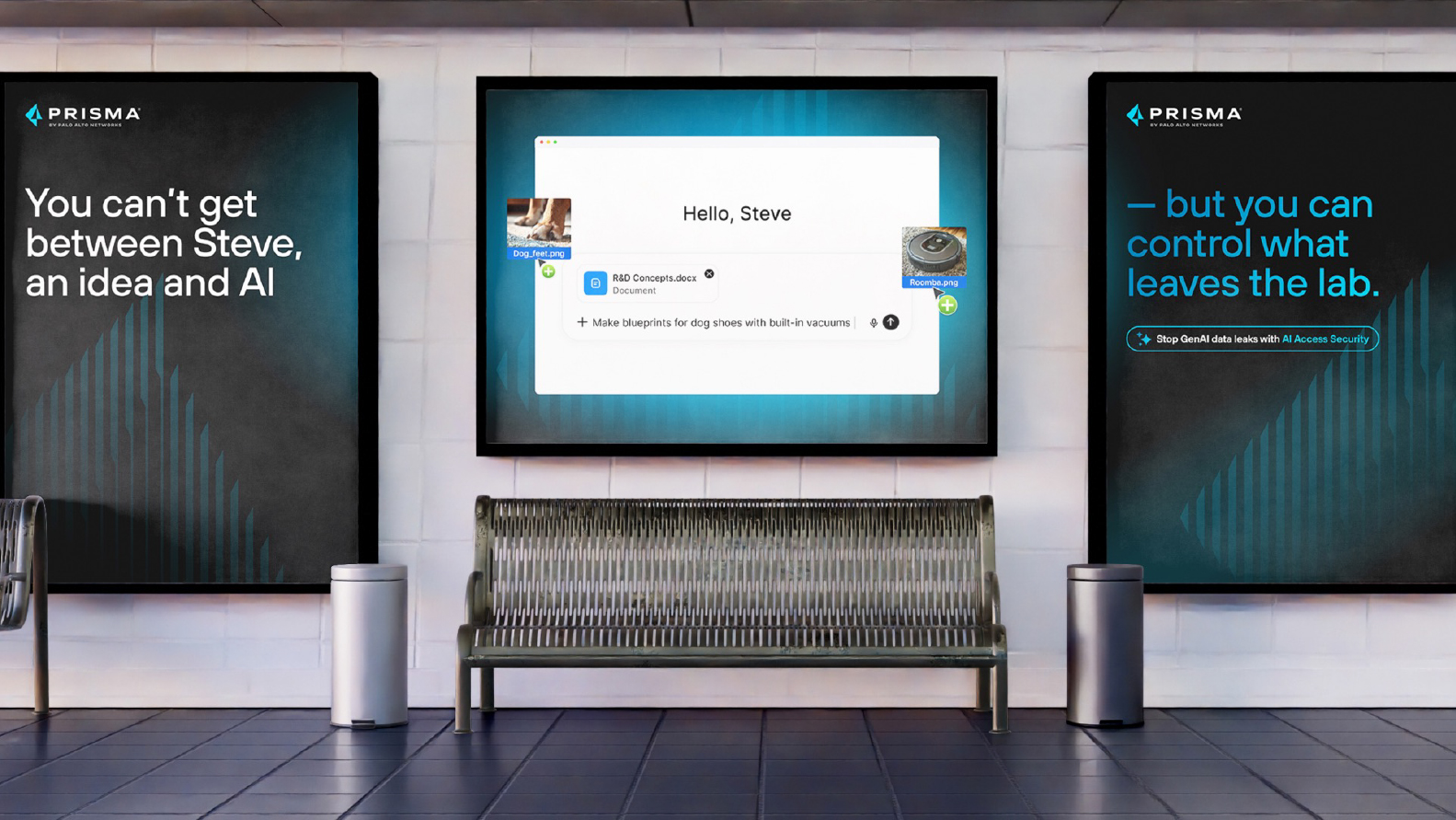
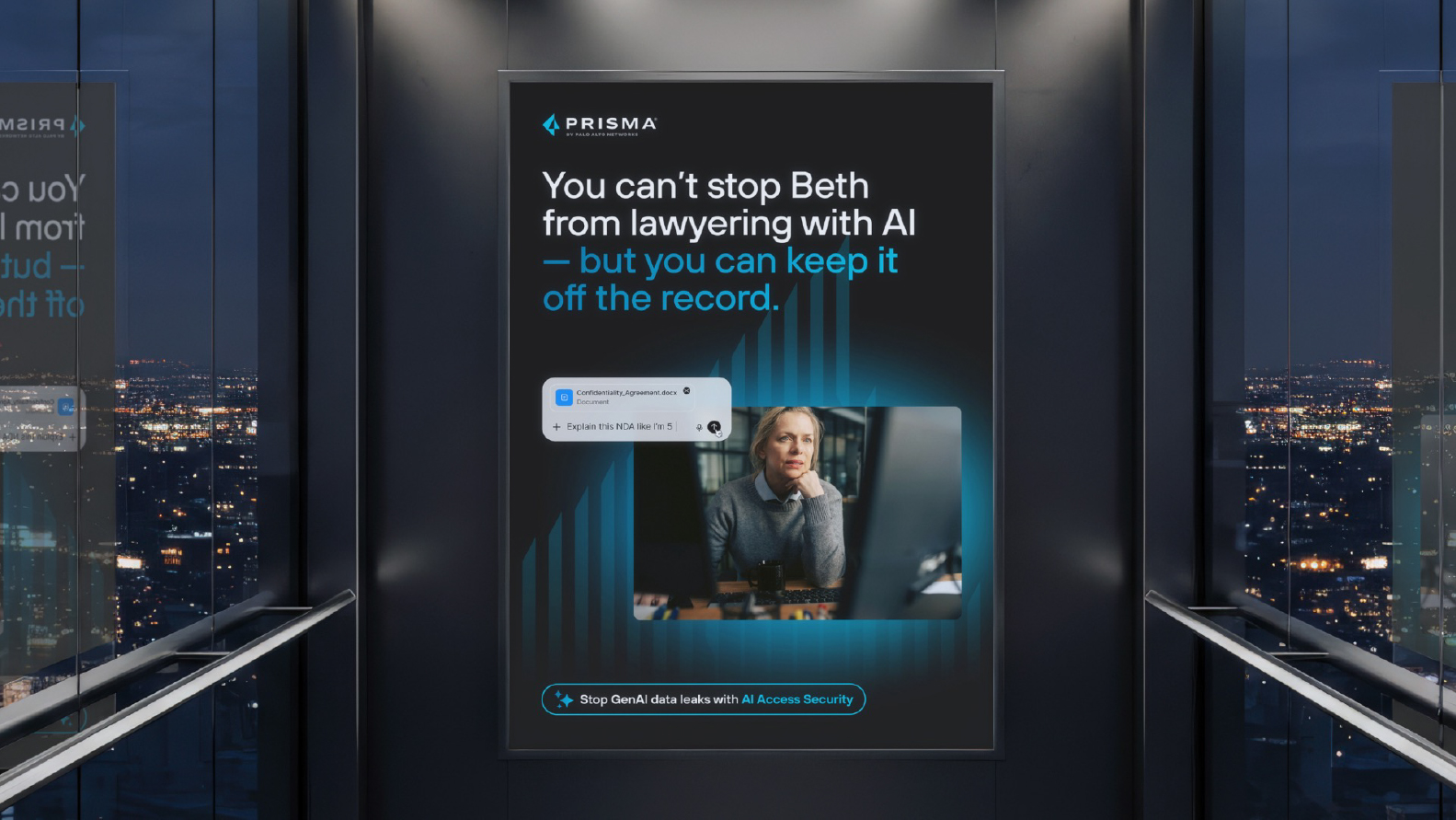
“You can’t control how people use AI, but you can control how you’re protected” became the spine of the campaign, then flexed into a cast of characters: Scott asking AI for accounting miracles, Debbie feeding her creative work into a prompt box, Beth asking a chatbot to “explain this NDA like I’m 5,” Steve pasting R&D concepts into an image generator to sketch dog shoes with built-in vacuums.
Each execution paired a believable, slightly uncomfortable AI interaction with the same reassurance: Prisma AI Access Security is watching the parts that matter. The tone stayed dry and specific rather than alarmist, the humor is in how plausible each scenario is, not how absurd.
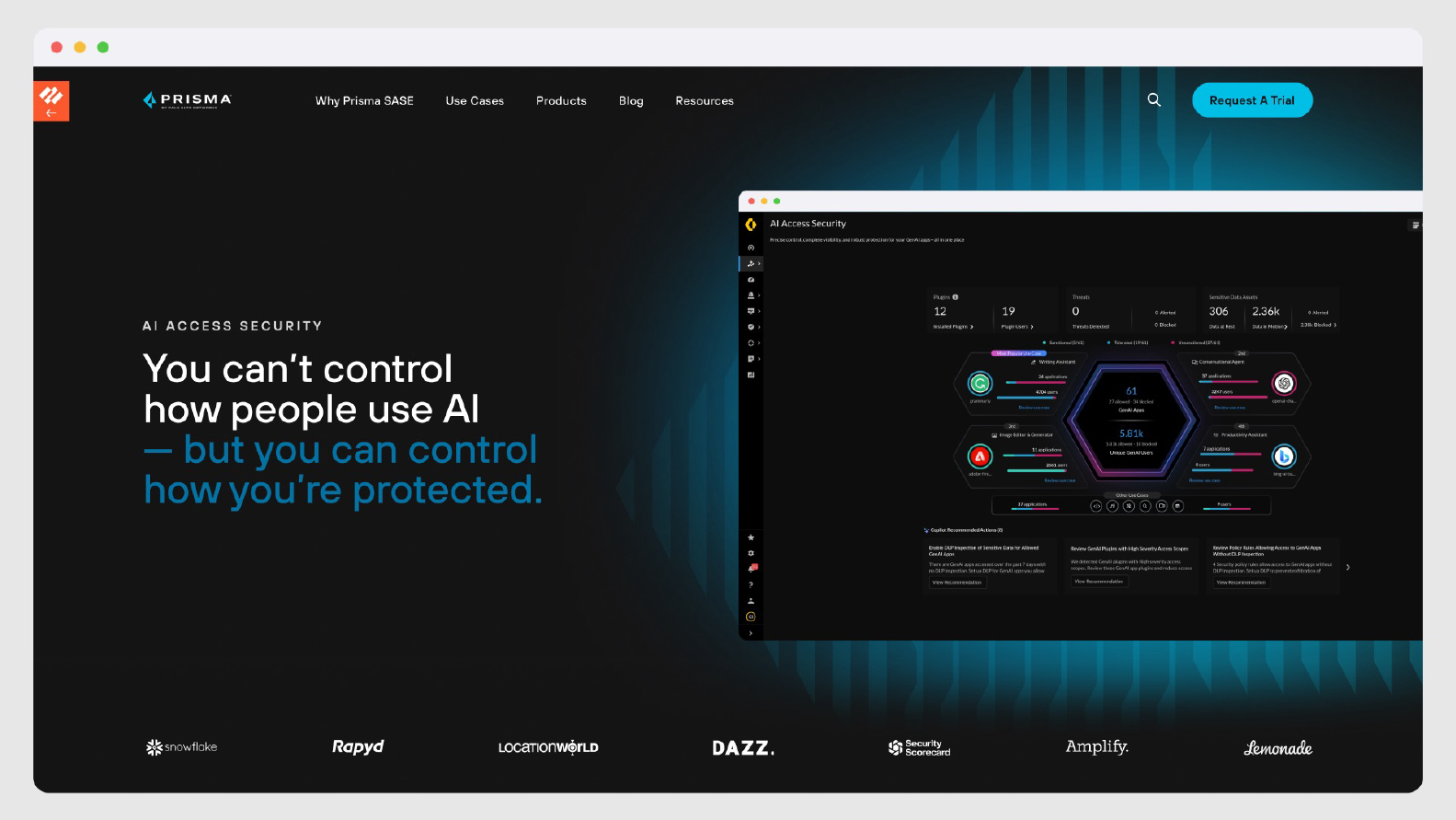
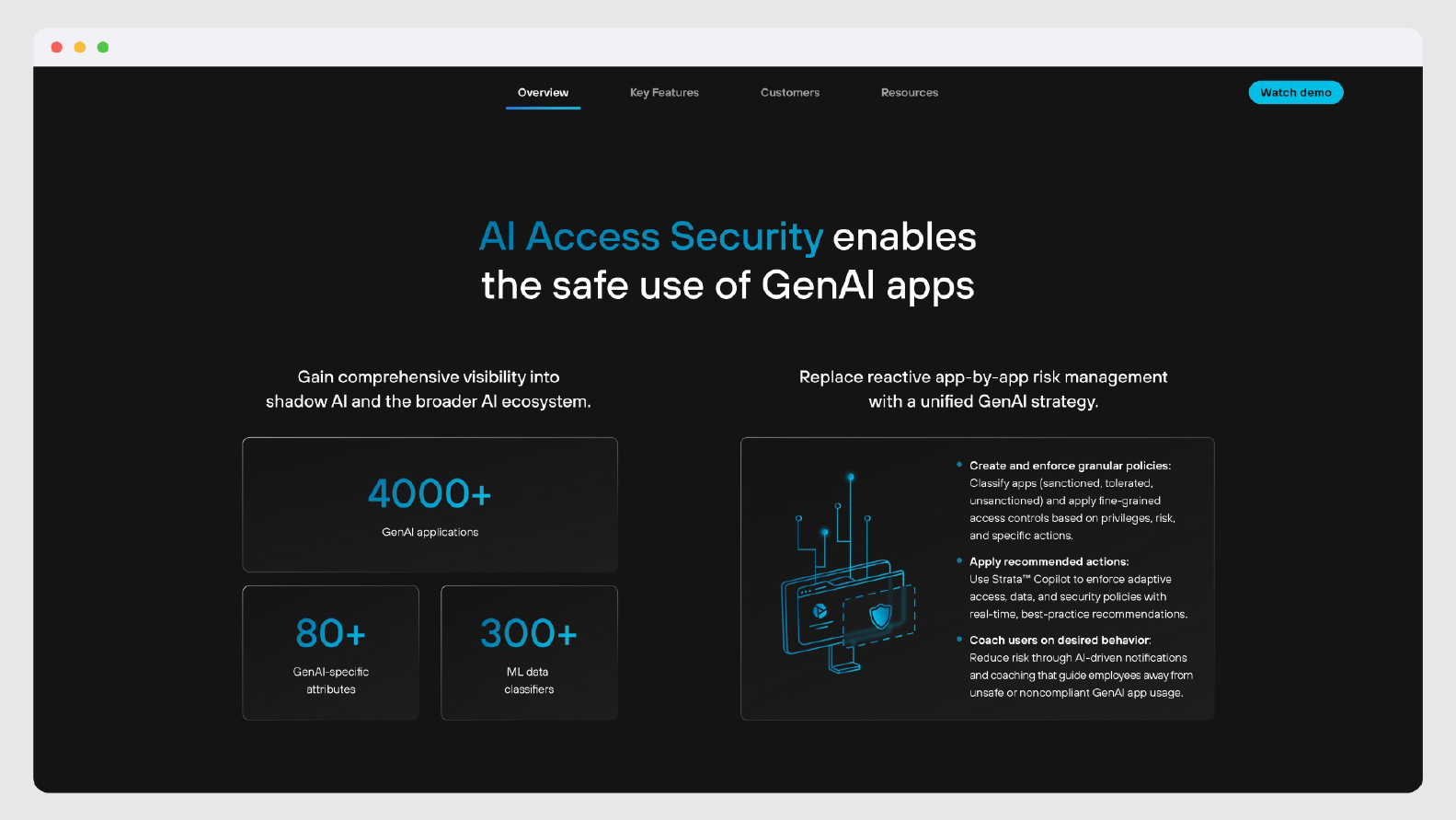
The platform was built to travel. Native chat-interface mockups for paid social and display. Two-panel OOH and transit takeovers for high-traffic urban environments. And a product-page treatment that shifted from the human story to the hard numbers, visibility into thousands of GenAI applications, hundreds of GenAI-specific attributes, and the ML classifiers doing the work behind the scenes.
Results
By turning a technical access-security tool into a human story, we created work that was distinctive and commercially effective. The campaign didn’t just get noticed, it moved AI Access Security from a buried feature to a named driver of pipeline.